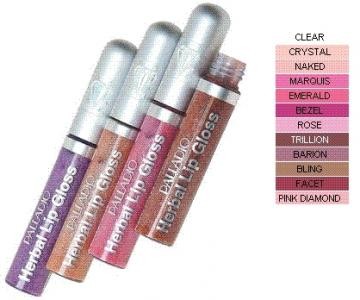
Palladio Herbal Lip Gloss in Naked
Palladio Herbal Lip Gloss in Naked is extremely moisturizing with nice shine. This lip gloss is a must-have. Enriched with five beneficial herbs (Ginseng, Green Tea, Gingko Biloba, Chamomile and…

Palladio Herbal Lip Gloss in Naked is extremely moisturizing with nice shine. This lip gloss is a must-have. Enriched with five beneficial herbs (Ginseng, Green Tea, Gingko Biloba, Chamomile and…

Maybelline was created by T.L Williams in 1915. The name was inspired by his sister Maybel.
Maybel used to use a combination of coal dust and Vaseline under her eyes and on her brows to enhance her looks. As T.L. Williams was a chemist, he started working on a combination of formulas which he began to sell under a different name. The product sold, but the name never took.
Because Maybel inspired the product, T.L Williams created the name Maybelline which was a combination of Maybel and Vaseline.
Maybelline was bought by L’Oreal in 1996 and continues to be a world wide favorite.
Thomas Williams invented the Mascara and Brow Liner that helps women have safer application methods of these products
1930’s
Maybelline eyebrow colour.

1946
Maybelline was the worlds first cosmetic brand on TV and Rita Hayworth was Maybelline’s first signature model.

1970-1980’s
First mascara tube packaging ever and Great Lash Mascara packaging.
1991
Payoff line “Maybe she’s born with it, Maybe it’s Maybelline” is coined
L’Oreal USA buys Maybelline and its headquarters moves to NY.
2002
Becomes no 1 cosmetic brand in the USA. In 2002 becomes no 1 brand in the world
2004
Maybelline takes on the equity and brand Character of new york city and becomes officially known as Maybelline NY.
Browse Maybelline product reviews here.
{module 672}


After emigrating to America in 1904 Max Factor moved his family and business to Los Angeles, California, seeing an opportunity to provide made to order wigs and theatrical make-up to the growing film industry. Besides selling his own make-up products he soon became the West Coast distributor of Leichner and Minor, two leading theatrical make-up manufacturers.
During the early years of movie-making, greasepaint in stick form, although the accepted make-up for use on the stage, could not be applied thinly enough, nor were the colours appropriate to work satisfactorily on the screen. Factor began experimenting with various compounds in an effort to develop a suitable make-up for the new film medium. By 1914 he had perfected the first cosmetic specifically created for motion picture use — a thinner greasepaint in cream form, packaged in a jar, and created in 12 precisely-graduated shades. Unlike theatrical cosmetics, it would not crack or cake. It was worn for the first time by actor Henry B. Walthall, who served as the model for screen tests.
With this major achievement to his credit, Max Factor became the authority on cosmetics. Soon, movie stars were eager to sample the “flexible greasepaint”.
By the 1920 Max Factor was becoming known outside of the film community, which led to the company in the early 1930s developing an in-house public relations department ,
While Max Factor was perfectly happy for the company to remain a specialised supplier of products to the film community his children were convinced that they could grow the company into a much larger enterprise.
National distribution began in 1927 when Sales Builders, an established distribution company obtained the rights to advertise, distribute and sell Factor’s products. Due to his strong connection with the film community Max Factor was able to use celebrity endorsements in advertising its products. In return for a nominal payment of US$1 to the actress the advertising would also promote the star’s latest film.
After Max Factor's death in 1938, Frank Factor took the name Max Factor, Jr and expanded the still private cosmetics firm, along with members of the immediate family including Sidney Factor, Louis Factor, Davis Factor and Max Firestein.
In 1939 Max Factor Jr began development of a smear proof lipstick which would also be non irritating and not change colour. A kissing machine was constructed to test the formula’s resistance to fading. The result was released in 1940 as ‘Tru-Color’ in 6 shades of red.

During World War 2 developed make-up shades for use by the US Marine Corps in camouflaging faces.
In 1947 after 26 months of development by Max Factor, Jr the company released ’Pan-Stik’ a cream make-up supplied in stick form and designed to take advantage of the latest changes in studio lighting and film stock. This product was quick to apply as well as non-greasily. It was released to the public in 1948 and was immediately commercially successful.

In 1951 the company expanded their range to offer a range of male shampoo, aftershave lotion, deodorant and shaving foams.
The introduction of colour television lead the company to develop Max Factor Color TV make-up, which became the standard for use in colour television
During Chester Firestein’s time in charge the company expanded overseas and launched many new products including Musk for men, UltaLucent Waterproof make-up and in 1975 the successful Halston line of fragrances, which quickly became the second best-selling designer fragrance in the world. (Chanel No. 5 was first).
It was under Norton Simon that Max Factor launched "Maxi," a line of makeup aimed at a younger, more savvy consumer. Maxi sold products aimed at adolescent tastes, such as lip gloss, colour rubs and "mood" lipsticks. In 1983 Norton Simon was taken over by Esmark, by which time no one in the Factor family was involved in the company’s day to day operations. A year later Esmark merged with Beatrice Foods, which lumped Max Factor into their Playtex beauty division and moved the Max Factor headquarters from Los Angeles to Stamford Connecticut. In 1986, Ronald Perelman of Revlon bought the Playtex beauty division for $500 million. In 1991, Revlon sold Max Factor to Procter & Gamble for $1.5 billion. As of 2007, Procter & Gamble still owns the Max Factor brand.
By the first quarter of 2010 Procter & Gamble will discontinue Max Factor in the United States as P&G focuses its marketing efforts on the more successful CoverGirl cosmetics line. Max Factor will continue to be marketed overseas.
Browse Max Factor product reviews here.
{module 673}

CARMEX Moisturizing Lip Balm Long -lasting relief for dry, chapped lips

After emigrating to America in 1904 Max Factor moved his family and business to Los Angeles, California, seeing an opportunity to provide made to order wigs and theatrical make-up to the growing film industry. Besides selling his own make-up products he soon became the West Coast distributor of Leichner and Minor, two leading theatrical make-up manufacturers.
During the early years of movie-making, greasepaint in stick form, although the accepted make-up for use on the stage, could not be applied thinly enough, nor were the colours appropriate to work satisfactorily on the screen. Factor began experimenting with various compounds in an effort to develop a suitable make-up for the new film medium. By 1914 he had perfected the first cosmetic specifically created for motion picture use — a thinner greasepaint in cream form, packaged in a jar, and created in 12 precisely-graduated shades. Unlike theatrical cosmetics, it would not crack or cake. It was worn for the first time by actor Henry B. Walthall, who served as the model for screen tests.
With this major achievement to his credit, Max Factor became the authority on cosmetics. Soon, movie stars were eager to sample the “flexible greasepaint”.
By the 1920 Max Factor was becoming known outside of the film community, which led to the company in the early 1930s developing an in-house public relations department ,
While Max Factor was perfectly happy for the company to remain a specialised supplier of products to the film community his children were convinced that they could grow the company into a much larger enterprise.
National distribution began in 1927 when Sales Builders, an established distribution company obtained the rights to advertise, distribute and sell Factor’s products. Due to his strong connection with the film community Max Factor was able to use celebrity endorsements in advertising its products. In return for a nominal payment of US$1 to the actress the advertising would also promote the star’s latest film.
After Max Factor's death in 1938, Frank Factor took the name Max Factor, Jr and expanded the still private cosmetics firm, along with members of the immediate family including Sidney Factor, Louis Factor, Davis Factor and Max Firestein.
In 1939 Max Factor Jr began development of a smear proof lipstick which would also be non irritating and not change colour. A kissing machine was constructed to test the formula’s resistance to fading. The result was released in 1940 as ‘Tru-Color’ in 6 shades of red.
During World War 2 developed make-up shades for use by the US Marine Corps in camouflaging faces.
In 1947 after 26 months of development by Max Factor, Jr the company released ’Pan-Stik’ a cream make-up supplied in stick form and designed to take advantage of the latest changes in studio lighting and film stock. This product was quick to apply as well as non-greasily. It was released to the public in 1948 and was immediately commercially successful.
In 1951 the company expanded their range to offer a range of male shampoo, aftershave lotion, deodorant and shaving foams.
The introduction of colour television lead the company to develop Max Factor Color TV make-up, which became the standard for use in colour television
During Chester Firestein’s time in charge the company expanded overseas and launched many new products including Musk for men, UltaLucent Waterproof make-up and in 1975 the successful Halston line of fragrances, which quickly became the second best-selling designer fragrance in the world. (Chanel No. 5 was first).
It was under Norton Simon that Max Factor launched "Maxi," a line of makeup aimed at a younger, more savvy consumer. Maxi sold products aimed at adolescent tastes, such as lip gloss, colour rubs and "mood" lipsticks. In 1983 Norton Simon was taken over by Esmark, by which time no one in the Factor family was involved in the company’s day to day operations. A year later Esmark merged with Beatrice Foods, which lumped Max Factor into their Playtex beauty division and moved the Max Factor headquarters from Los Angeles to Stamford Connecticut. In 1986, Ronald Perelman of Revlon bought the Playtex beauty division for $500 million. In 1991, Revlon sold Max Factor to Procter & Gamble for $1.5 billion. As of 2007, Procter & Gamble still owns the Max Factor brand.
By the first quarter of 2010 Procter & Gamble will discontinue Max Factor in the United States as P&G focuses its marketing efforts on the more successful CoverGirl cosmetics line. Max Factor will continue to be marketed overseas.
Browse Max Factor product reviews here.
{module 673}

Matrix Professional Hair Care is an international brand that was founded in 1980 by American, Arnie Miller. It services community salons with top quality hair care products that include hair colour, styling tools and accessories. The easy to use formulas have proven to be popular among professional hairstylists and their clients.
The Matrix product range includes hair care products - such as shampoo and conditioner, hair colour products – both semi-permanent and permanent colour, hair styling products – such as hair spray and hair gel as well as hair texture products – to help with volume and frizzy hair.
In addition to the product range available from Matrix, there are also training centres and academies to help professional hairstylists improve on their techniques. They can be found all over the world
{module 809}

Matis Professional Skin Care has been around for more than 74 years. They have a number of products under their brand that have proven to be popular because of the effective results that they offer.
The years of experience combined with the advanced technology used to make their skin care products means that they are able to develop treatments suitable for individual skin care needs. They have specialised diagnostic techniques to ensure that the treatment they develop for you is the right one.
The Matis product range includes a home use range for the face and body as well as a men’s range. In addition, you can get the Matis Lexique range and also the Matis Réponse Teint – Mineral Pro range of products.
The professional treatments can be received at Matis beauty salons or spas which are located in various countries around the world. These include firming, moisturising and repair treatments for your face and body.
{module 808}
Mary Cohr plant based products have been developed to give you skin care products that not only make your skin look beautiful but also makes it healthier. The unique combination of nature’s nutrients and mineral together with the latest technology gives you some of the best skin care products on the market.
The Mary Cohr anti-aging product range promises effective results because of the first class technology used to develop it. All products are made using three essential oils from sage, lavender and rosemary. These work well because they can easily be absorbed by the skin and pass on the goodness of nature.
You can choose from the various professional beauty salon treatments and be pampered for a day. After this, you can use one of the many Mary Cohr home products to keep your skin looking and feeling absolutely beautiful.
Mary Cohr is not only concerned about the health of your skin, but also the environment. They protect nature by using only sustainable plant species that are naturally replaced. In addition, their products are GMO free and not tested on animals.
{module 807}
Marc Anthony is a professional hair care products brand. The main aim of the Marc Anthony product range is to allow users to maintain the salon fresh look wherever they go.
It has something for all hair types and uses the latest technology to give you high quality and effective products. There is a range for curly hair to give it a think and glossy look, as well as frizz-free products that will give you sleek and shiny hair. Each of the products has been developed to address particular hair needs.
The Marc Anthony product range includes:
{module 799}